Kyoto Temple Tea Guide
A woman in a pale brown kimono kneels at a low table set with tea utensils under a red parasol, with red benches on either side, in an outdoor tea setting in a Tokyo garden

Kyoto · Jōtoku-ji temple

Sit down to tea inside a Kyoto temple

4.9 (3,837 verified reviews · GetYourGuide)

A tea master guides a small group through chanoyu in the Grand Tearoom of Jōtoku-ji temple.

See open dates ↗ From US$29

Likely to sell out. The tea master explains each step, and guests get the chance to practise the technique themselves.

The ceremony in four facts

Setting
The Grand Tearoom at Jōtoku-ji temple, Shimogyō ward, Kyoto.
Length
70 minutes, led in English by a Tea Master.
Group
A small group, limited to 10 participants.
Seating
On the floor, or on a seat or stool if you prefer.

Gate to tearoom

From the gate to the tearoom

The organiser's description follows a short path through the temple grounds. You will find start times by choosing a date, and again in your confirmation.

Weather decides where you wait: in fine weather the red benches, in rain the shop's gable or the Grand Tearoom itself.

  1. The gate

    Through the main gates

    You walk in through the temple's main gates. The entrance to the Grand Tearoom is on your left, with a parish shop beside it.

  2. The benches

    Meet your guide at the red benches

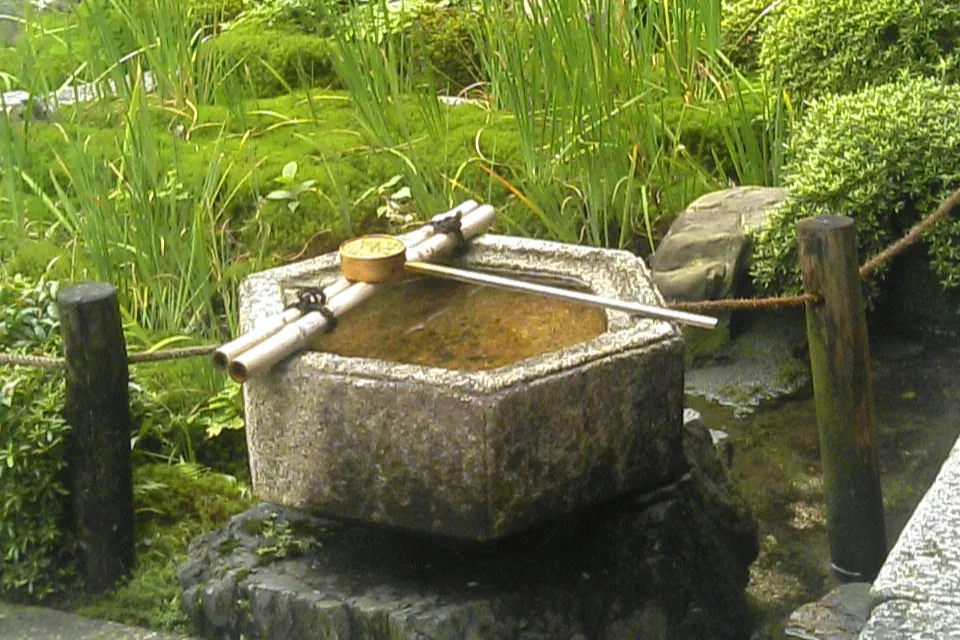
    Your guide waits at the red benches nearby. Until the ceremony starts you can look at the architecture, stand by the purification fountain or sit and take in the grounds.

  3. The water

    A purification ritual

    The tour of the temple begins with a traditional purification ritual, before anyone goes into the tearoom.

  4. The threshold

    Shoes off, in as a group

    At the entrance to the Grand Tearoom you remove your shoes and go in with your group. The tearoom is up three steps.

  5. The seat

    On the floor, or on a seat or stool

    You take your seat. If sitting on the floor in the traditional position is not comfortable, seats and stools can be provided.

  6. The tea

    Matcha, explained step by step

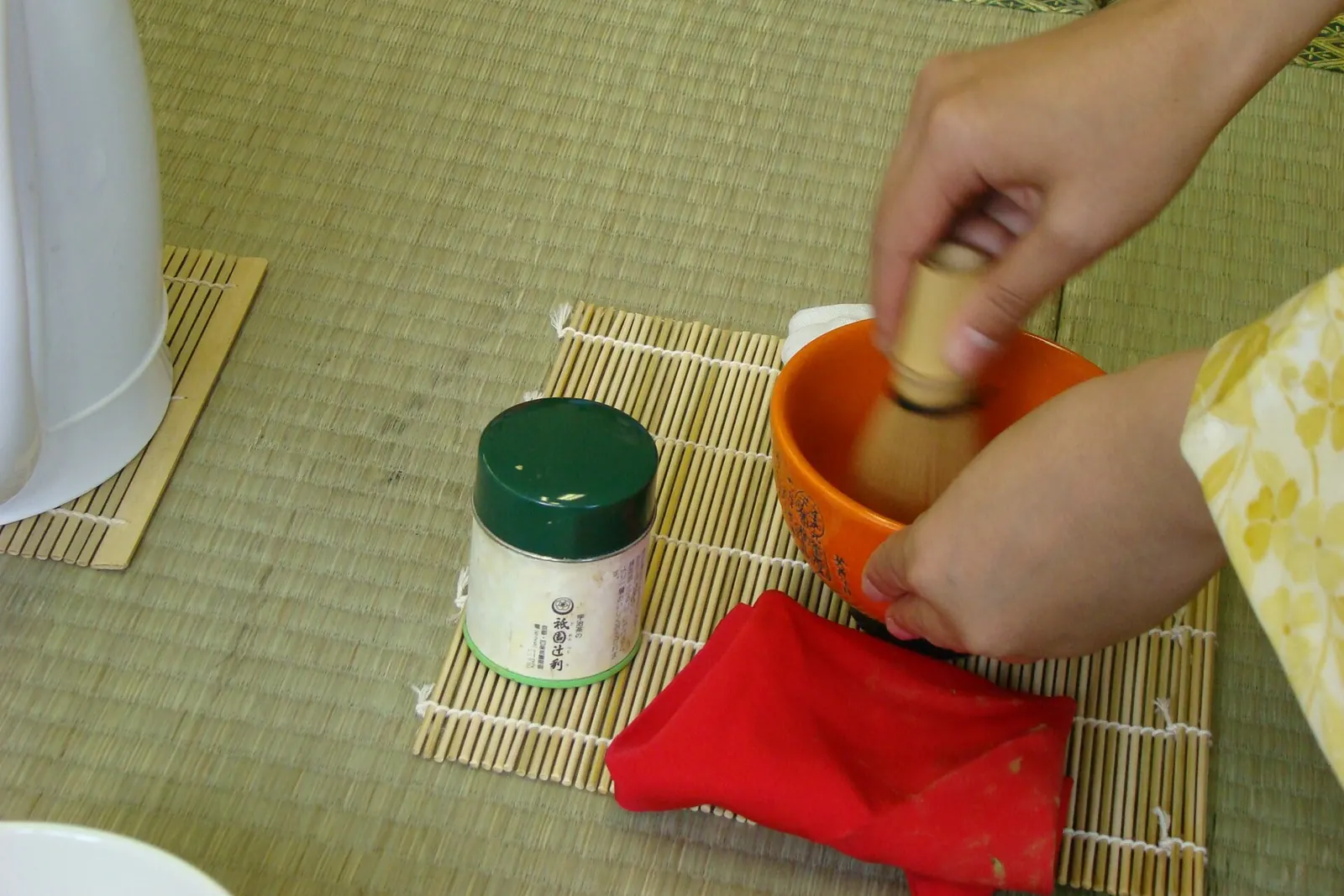
    The Tea Master guides you through the ceremony and explains each step. You sample matcha, learn how to drink it and hear why the ceremony matters.

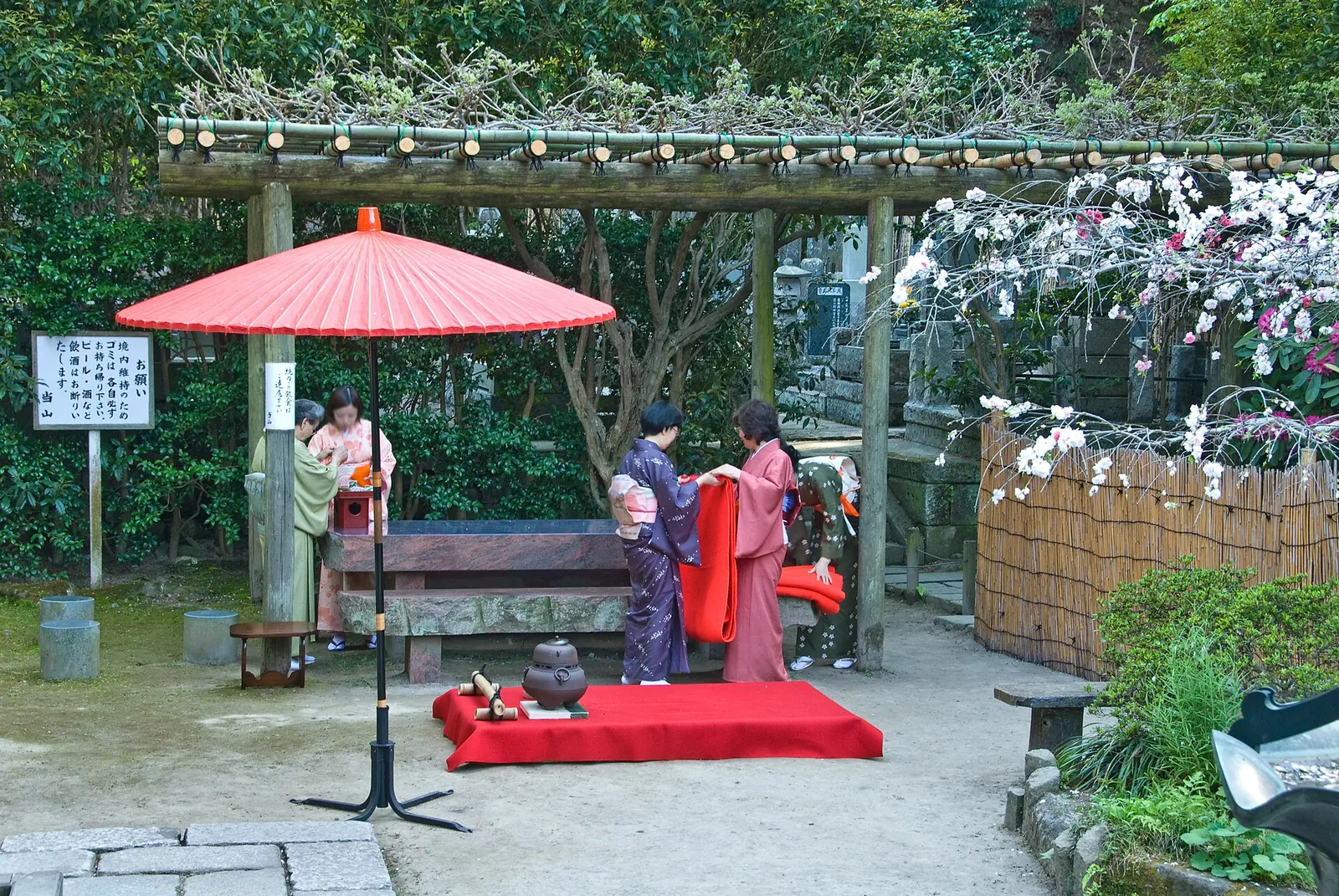
Outdoor tea at Ankokuron-ji, a temple in Kamakura: a red parasol and red mat laid out for tea under a wooden pergola with white blossom, with two women in kimono beside it

Tea and temples

Why a temple tearoom is different

Tea came to Japan with monks

Wikipedia dates the first documented evidence of tea in Japan to the 9th century, when the monk Eichū brought it from Tang China, and says powdered green tea was first used in religious rituals in Buddhist monasteries. Buddhists also used tea to prevent drowsiness during long meditations. Holding a tea ceremony in a temple fits that long history.
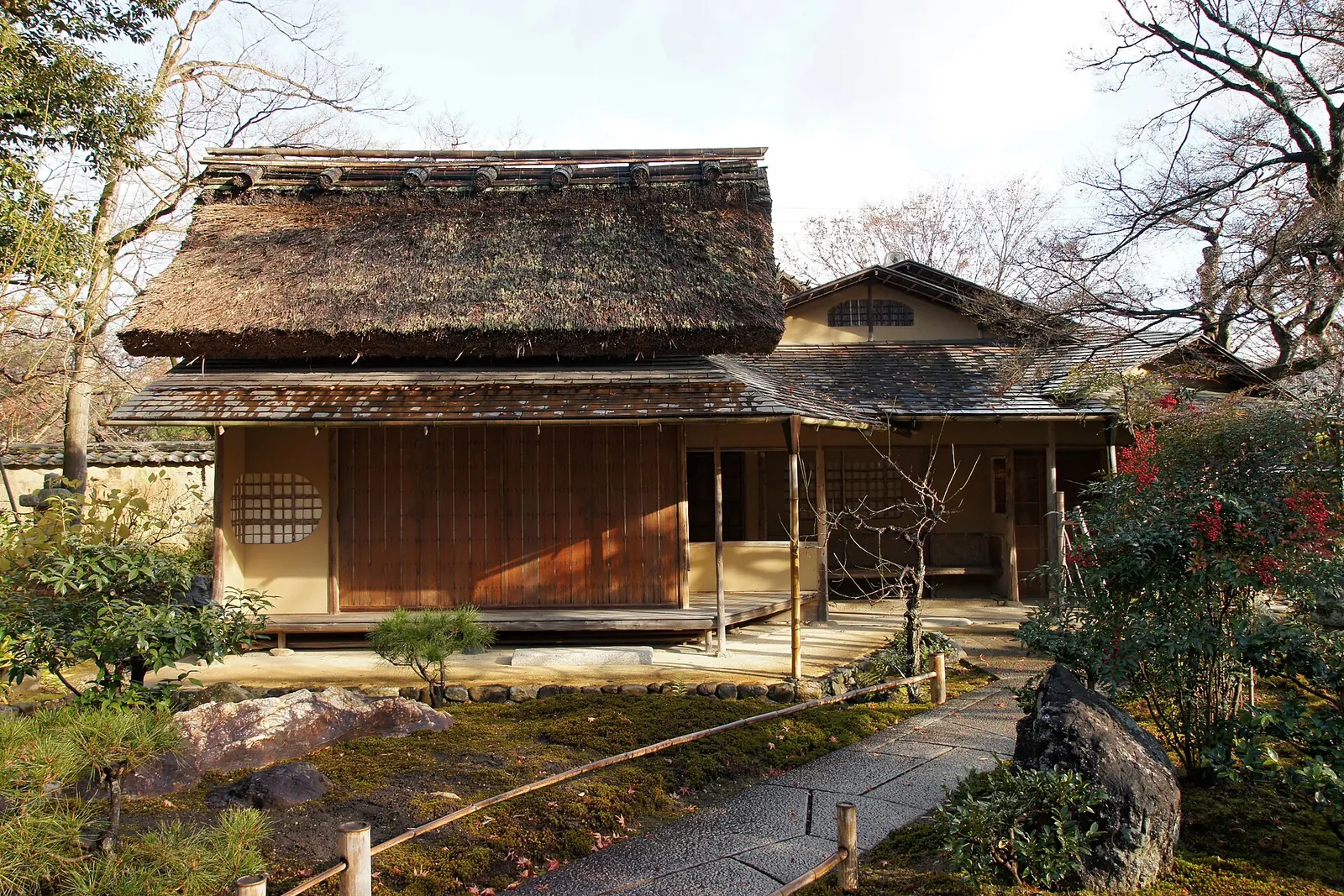
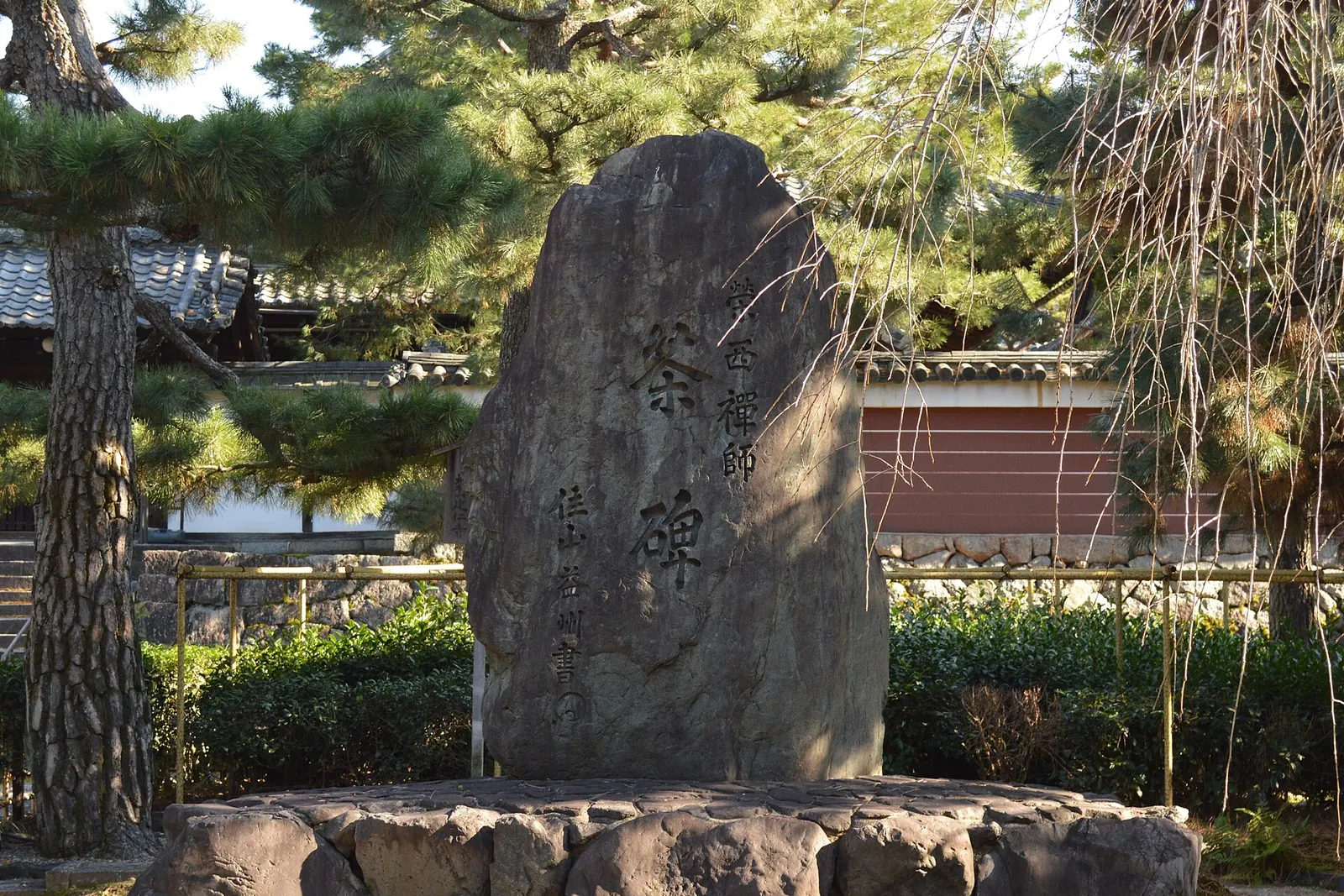
The setting does the teaching

The ceremony starts at the gate. You meet your guide at the red benches, begin with a purification ritual and take off your shoes at the Grand Tearoom. Wikipedia says purifying the hands and mouth before tea is influenced by the Shinto ritual of misogi. By the time you sit, the pace has already slowed.

A Pure Land temple, not a Zen one

Japanese Wikipedia lists Jōtoku-ji as Jōdo-shū, the Pure Land school. The famous Zen link with tea runs through temples such as Kennin-ji and Daitoku-ji, which the tea and Zen guide explains. What this ticket gives you is a temple setting and a Tea Master who explains each step.

A workshop, not a full gathering

Wikipedia says a formal chaji, with its meal, can run to four hours, while Japan-guide.com notes that most ceremonies today are much shorter. This is 70 minutes for a small group: an introduction, with room for questions. Read the guides below for what to expect and how to prepare.

Seats, steps and small print

Six things to know before choosing a date

Six practical points from the booking page, in plain words.

Floor, seat or stool
The traditional position is on the floor. For anyone not comfortable sitting that way, seats and stools can be provided. Tell your guide before the group goes in.
Three steps
The temple is wheelchair accessible but the tearoom is not, because it is up three steps. The organiser rules the ceremony out for wheelchair users.
Children
Not suitable for children under 5. The ceremony is best suited to guests aged 5 and over.
Kimono
A kimono can be rented separately. It is optional, and you arrange it apart from the ceremony.
The meeting point
556 Motoshiogamachō, Shimogyō-ku, Kyoto. Walk in through the main gates and look for the red benches.
Rain
In wet weather you can stand under the gable of the parish shop or wait inside the Grand Tearoom.

How you can take part

Four choices to make before you book

ChoiceWhat the booking page saysWorth knowing
Sit on the floor The traditional position, on the floor of the Grand Tearoom. Seiza is hard to hold for long if you are not used to it.
Take a seat or stool Seats and stools can be provided for anyone not comfortable on the floor. Tell your guide first. The tearoom is still up three steps.
Rent a kimono A kimono can be rented separately. Optional, and arranged apart from the ceremony.
Bring a child Not suitable for children under 5. Best suited to guests aged 5 and over.

Look up temple ceremony dates ↗

Three tea ceremonies, three settings

Tea ceremonies in Kyoto, by setting

The first card is the temple ceremony this page describes. The second seats guests on chairs, which may suit you better if floor sitting or steps are a worry, and the third is a shorter lesson on tatami.

Ju-An tea ceremony at Jōtoku-ji temple

4.9 · 3,837 reviews · From US$29

A 70-minute group ceremony in the temple's Grand Tearoom, with seats or stools for anyone who cannot sit on the floor.

Check dates ↗

Table-style tea ceremony in a machiya

4.9 · 1,352 reviews · From US$45

Matcha and sweets at tables and chairs in a Kyoto townhouse in Fushimi, south of the centre, so no floor sitting at all.

Check dates ↗

45-minute tea ceremony lesson on tatami

4.3 · 2,534 reviews · From US$22

A shorter lesson in a Kyoto tearoom, led by a host the organiser describes as a licensed Urasenke tea master. You watch, make tea yourself and finish with sweets.

Check dates ↗

Open dates for the temple ceremony

Fares and dates in this panel follow the currency you choose.

More to do in Kyoto

All tea ceremonies in Kyoto ↗

Getting ready

Before you go

  • Save the address

    The meeting point is 556 Motoshiogamachō, Shimogyō-ku, Kyoto 600-8119. Japanese Wikipedia says the temple can be reached from Kiyomizu-Gojō station on the Keihan line, or from the Kawaramachi-Gojō bus stop.

  • Pick a date, then read the time

    Start times are not fixed on this page. The booking calendar shows the options for each date, and your confirmation repeats the time you chose.

  • Wear socks and sit-low clothes

    Shoes come off at the Grand Tearoom entrance. Modest clothes you can bend your knees in are easiest, and Japan-guide.com advises removing jewellery and avoiding strong perfume.

  • Allow for rain

    You wait in the grounds before the ceremony. In rain you can stand under the gable of the parish shop or wait inside the Grand Tearoom.

  • Tell the guide about the floor

    If you would like a seat or stool, say so at the benches. It is a stated option for anyone not comfortable on the floor.

  • Choose another room if steps are a problem

    The tearoom is up three steps. The table-style ceremony on the second booking card is built around chairs.

FAQ

What people ask before booking

Can I really do a tea ceremony inside a Kyoto temple?

Yes. This ticket is a 70-minute chanoyu workshop in the Grand Tearoom at Jōtoku-ji temple in Shimogyō ward. You meet your guide at the red benches inside the temple grounds.

What if I cannot sit on the floor?

Seats and stools can be provided for anyone not comfortable sitting on the floor in the traditional position. Tell your guide before the group goes in.

Is the tearoom wheelchair accessible?

No. The temple is wheelchair accessible, but the tearoom is up three steps, and the organiser rules the ceremony out for wheelchair users.

Is Jōtoku-ji a Zen temple?

No. Japanese Wikipedia lists it as a Jōdo-shū temple, the Pure Land school. The Zen links with tea come from temples such as Kennin-ji and Daitoku-ji.

Can children come?

Not children under 5. The ceremony is best suited to guests aged 5 and over.

Can I wear a kimono?

You can. A kimono can be rented separately, and it is optional. Reviewers mention arriving in kimonos they rented beforehand.

How long does the ceremony last?

It lasts 70 minutes. Choose a date to see its start times; your confirmation repeats the one you picked.

Do I need to know tea etiquette?

No. Japan-guide.com says regular tourists are not expected to know the rules in detail, and the Tea Master explains each step.

A 70-minute tea ceremony in a Kyoto temple, with a seat or stool if the floor is not for you.

Book the temple tea ceremony ↗

Choose a date and the fare appears in your currency.

See open datesFree cancellation up to 24 hours before