The short answer
Tea ceremony in a Kyoto temple
Can you join a tea ceremony inside a Kyoto temple? Yes: 70 minutes in the Grand Tearoom at Jōtoku-ji, with a seat or stool if the floor is too hard.
Book the temple tea ceremony ↗Quick answer
Yes. A 70-minute tea ceremony for a small group takes place in the Grand Tearoom at Jōtoku-ji, a temple in Kyoto's Shimogyō ward. You meet your guide at the red benches in the grounds, begin with a purification ritual, take off your shoes and take your seat. If sitting on the floor in the traditional position is hard for you, seats and stools can be provided. The tearoom is up three steps, so wheelchair users are ruled out.
What you are booking
This ticket covers a chanoyu workshop at Jōtoku-ji, a temple in Kyoto's Shimogyō ward. It lasts 70 minutes and is led in English by a Tea Master. The booking page limits the group to 10 participants. Chanoyu, which means hot water for tea, is the Japanese tea ceremony, and it centres on preparing and serving matcha, a powdered green tea. Here the Tea Master shows and explains each step, and guests learn how to drink matcha and why the ceremony matters. Start times sit in the booking calendar rather than on this page, so pick a date there to see them.
Where you meet and what you walk past
You enter through the main gates of the temple. The entrance to the Grand Tearoom is on your left, with a parish shop beside it, and your guide waits nearby at the red benches. Before the ceremony begins you are free to look at the architecture and to stand by the purification fountain. In fine weather you can sit on the benches for a break. In rain, the booking page says you can stand under the gable of the shop or wait inside the Grand Tearoom. The meeting point is 556 Motoshiogamachō, Shimogyō-ku, Kyoto, and the address is worth saving before you set out.
Read next: Jōtoku-ji: the setting for the tea
Purification, shoes and the tearoom
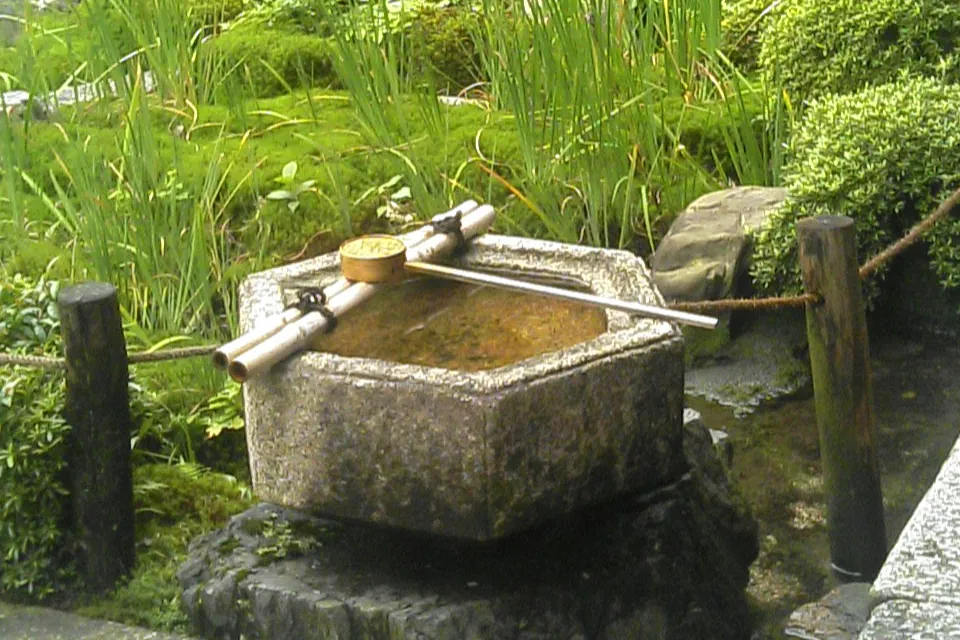
The tour of the temple begins with a traditional purification ritual. Shoes come off at the door of the Grand Tearoom, and you go in as a group to take your seat. Washing hands and rinsing the mouth before tea has deep roots: Wikipedia says the practice of purifying one's hands and mouth before the ceremony is influenced by the Shinto ritual of misogi. Japanese tearooms are traditionally floored with tatami mats, which is why shoes stay at the door. Wear socks without holes.
Sitting on the floor, or not
The traditional way to sit at a tea ceremony is seiza, kneeling with the buttocks resting on the heels. Wikipedia notes that people unused to it often find it hard to hold for more than a minute or two. The booking page is plain about this: for those not comfortable sitting on the floor in the traditional position, seats and stools can be provided. So the floor is not a condition of booking. Mention it to your guide early, before the group goes in, and read the seating guide if you want the detail on what to ask for.
Read next: Tea ceremony: floor, seat or stool
At the tea itself
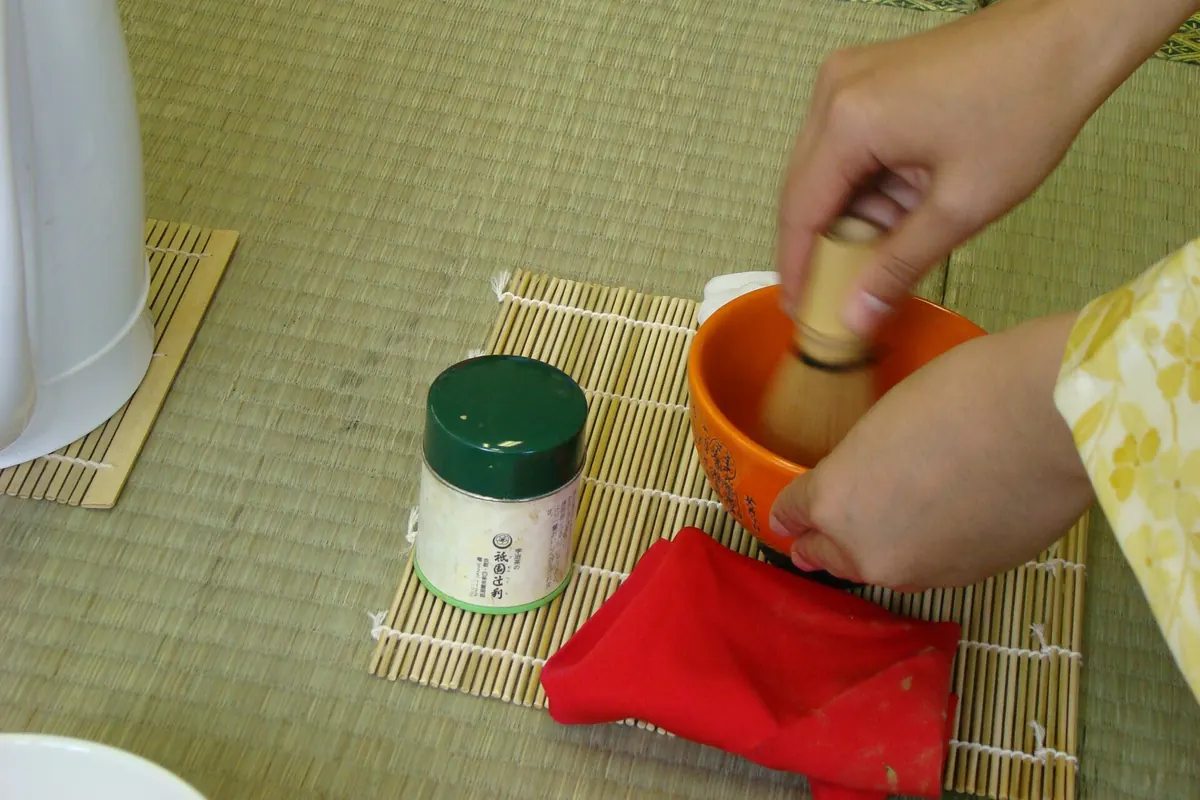
Inside the Grand Tearoom the Tea Master guides the group through the ceremony, showing and explaining every step. You sample matcha, the powdered tea that is whisked in a bowl with a bamboo whisk called a chasen, and you are taught the fine art of drinking it. The organiser says guests get the chance to practise the techniques themselves, and reviewers mention preparing their own matcha. They also say the hosts welcome questions. The format is a group workshop, so expect shared explanation rather than a private tea gathering.
Why tea and temples belong together
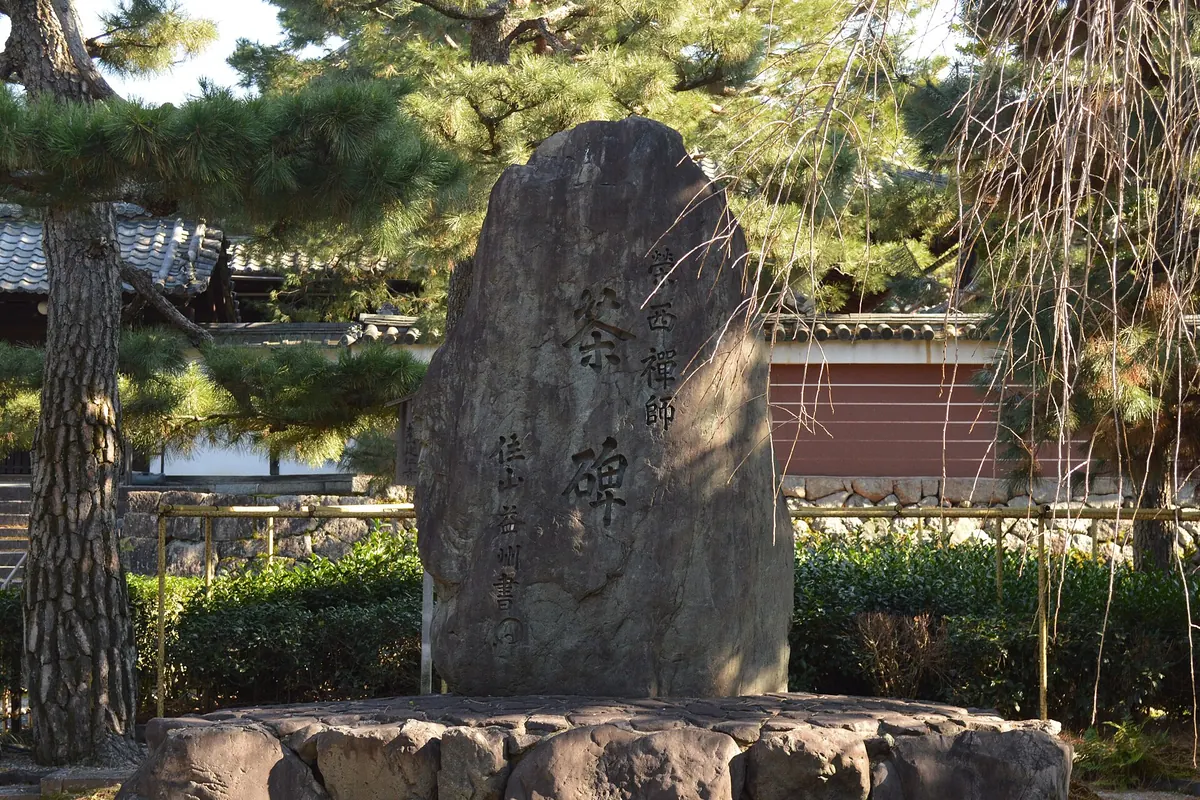
Tea and Buddhism are old companions in Japan. Wikipedia says Buddhists used tea to prevent drowsiness during long meditations, and that powdered green tea was first used in religious rituals in Buddhist monasteries. The monk Eisai, credited with popularising green tea after his return from China in 1191, founded Kennin-ji in Kyoto in 1202. That story belongs mostly to Zen, and Jōtoku-ji is not a Zen temple: Japanese Wikipedia lists it as Jōdo-shū, the Pure Land school. The Zen connection is the history of tea, not something this tearoom claims.
The temple behind the tearoom
Japanese Wikipedia describes Jōtoku-ji as a Jōdo-shū temple in Motoshiogamachō whose main image is a standing Amida Nyorai statue, designated an Important Cultural Property in 2023. It says the temple is traditionally said to have been founded in 1603, that the present main hall was moved in 1911 from Eikan-dō, and that the grounds include a dry landscape garden. It is also known as Yotsugi Jizō. The Grand Tearoom sits near the gate, beside a parish shop, and the booking page invites you to look at the temple's architecture while you wait.
What this ceremony is not
The formal chaji is a different thing: Wikipedia describes a gathering built around a kaiseki meal with two kinds of tea, which can stretch to four hours. Japan-guide.com notes that most tea ceremonies today are much abbreviated. A 70-minute workshop is a short introduction in that tradition rather than a full gathering. It is also not a Zen practice session or a meditation retreat, and it is not a private ceremony. Choose it for the setting, the explanation and the matcha.
What travellers report
As of this update the ceremony averages 4.9 from 3,837 reviews, and 93 percent of the English-speaking reviewers rated it a perfect five. Reviewers praise the knowledgeable guides, the peaceful atmosphere of a temple and the hands-on matcha making. One reviewer contrasts it with tea ceremonies held in modern buildings and prefers the temple. Some travellers would like more historical context, so arrive with the questions you want answered. Reviewers who wore kimonos they had rented in advance say they enjoyed it, and one says the tea master was pleased.
Choosing a date
Select a date and the calendar shows its start times; the confirmation repeats yours. The booking page flags the ceremony as likely to sell out, so choose early if your dates are fixed. Through GetYourGuide the booking can be cancelled for a full refund up to a day ahead, and the place can be held now with payment later. Arrive at the red benches in good time, since the guide meets the group there before everyone goes into the Grand Tearoom together. Save the address, 556 Motoshiogamachō, Shimogyō-ku, in your phone before you set out.
Who this isn't for
Wheelchair users: the temple grounds are accessible, but the tearoom is up three steps and the organiser rules the ceremony out for wheelchair users. Children under 5 cannot take part, and the ceremony is best suited to guests aged 5 and over. Anyone wanting a full formal gathering with a meal, a private session or a Zen meditation should look elsewhere. Anyone who cannot manage three steps should also weigh the chair-based Kyoto ceremony on this page.
Frequently asked questions
Is the tea ceremony really inside a temple?
Yes. It is held in the Grand Tearoom at Jōtoku-ji in Shimogyō-ku, and you meet your guide at the red benches inside the temple grounds. Japanese Wikipedia lists the temple as Jōdo-shū, the Pure Land school, rather than Zen.
Must I sit on the floor?
No. Seats and stools can be provided for anyone not comfortable sitting on the floor in the traditional position. Tell your guide early. The tearoom itself is up three steps.
How long does it last?
The booking page lists 70 minutes. Check the start times in the calendar and your confirmation, which are the ones that count.
Can children join?
Not children under 5. The booking page says the ceremony is best suited to guests aged 5 and over.
Can I wear a kimono?
Yes. The booking page says a kimono can be rented separately, and reviewers mention arriving in kimonos they rented in advance. It is an extra to arrange, not part of the ceremony.
Is it wheelchair accessible?
The temple grounds are, but the tearoom is not, because it has three steps. The organiser rules the ceremony out for wheelchair users.
What does chanoyu mean?
Chanoyu means hot water for tea. It is the Japanese tea ceremony, also called sadō or chadō, the way of tea, and it centres on preparing and serving matcha.
Sources